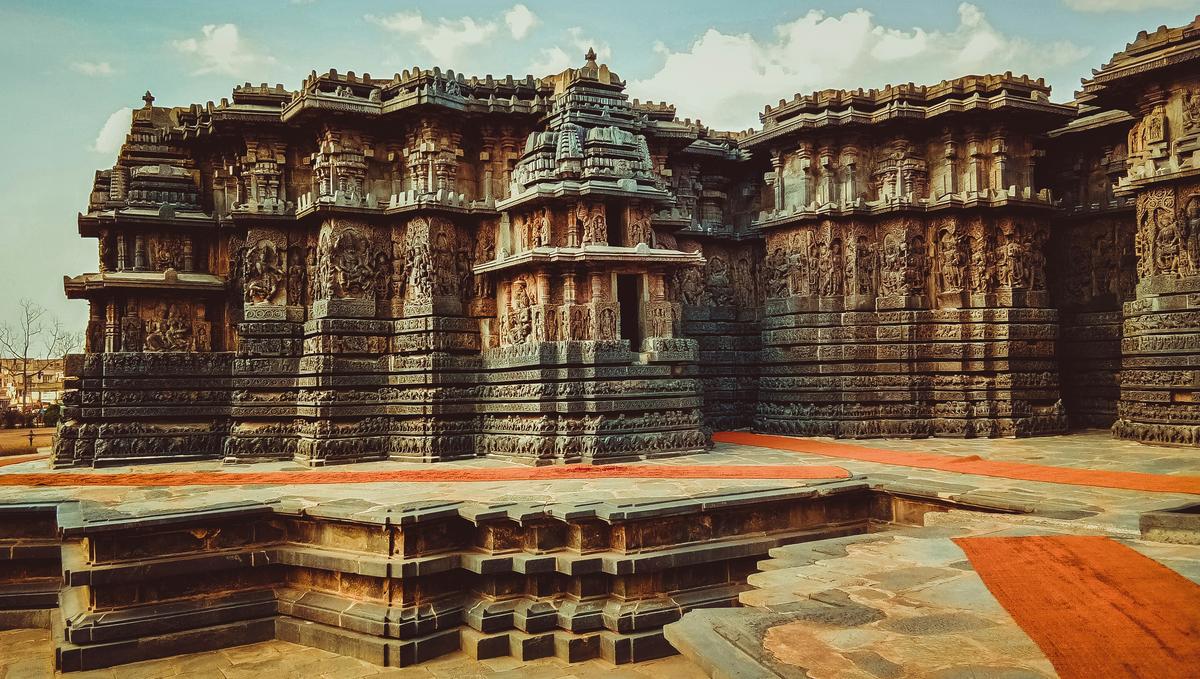
Image: Photo by Srinivas JD on Unsplash
Every place on Earth carries its own story and civilisations grow through exchange, friction, borrowing, and reinvention. China, Japan, Egypt, Greece, Persia, Arabia, the Americas and others has shaped the shared drama of human progress. We often forget how much of our modern world is a collective construction, built piece by piece by people separated by oceans and eras.
Knowledge travels well and it moves across deserts and seas, slips through trade routes, gets translated, mistranslated, critiqued, broken, rebuilt, and absorbed. Every corner of this planet has produced people who looked at the world and decided to understand it a little better and through this article, I talk about one such corner- India and what it has contributed to the long, ongoing story of human thought.
•••
Introduction
India, like many other places, offered its own thread to the tapestry: philosophies such as Yoga and Buddhism, mathematical innovations such as zero and the decimal system, and astronomers who charted the sky with startling precision. But it must be noted that these contributions were not products of exceptional bloodlines or mystical genius, these simply grew out of time, climate, continuity, and relentless intellectual curiosity.
Having lived most of my life outside India, I don’t claim deep insider understanding but my own fascination emerged from studying the Vedas, the Upanishads, and the history of early Indian thought in the last few years. These works of deep philosophical thoughts are among the earliest surviving texts in the world and something like the Rig-Veda doesn’t appear out of nowhere, it points to a long, well-developed linguistic and cultural tradition and where figures like Pāṇini, codified the entire Sanskrit grammar with a precision that still impresses modern linguists. India’s civilisational continuity is another striking feature and one can notice that among the great early civilisations namely Mesopotamia, Egypt, China, Norte Chico, the Olmec, it is the Indus-Saraswati civilisation that stands out today not only for its antiquity but for its unbroken cultural evolution and excavations like Rakhigarhi, pushing roots back to around 7000 BCE making it the oldest among the bunch and shows just how long this corner has been inhabited, adapted, rebuilt, and reimagined.
To make this corner of the world unique and long lasting, Geography has the most important part. When much of the world reeled under the Last Glacial Maximum (LGM), South Asia remained relatively warmer and as the Ice Age retreated, the subcontinent bloomed with more rivers, forests, and fertile land. More stability means more time, more time to experiment, observe, debate, and compose giving ancients the possibility to create a series of body of work that is still relevant today. Ancient India was predominantly an oral civilisation and absolutely mind boggling ways of memorisation such as the famous 11 ways of memorisation (Samhita, Pada, Krama, Jata, Maalaa, Sikha, Rekha, Dhwaja, Danda, Rathaa, Ghana) existed and even the highest intellectual traditions prized memorisation and internalisation. Knowledge moved from teacher to student by sheer memory, not manuscripts and when writing did occur, it was meticulous. Even today, millions of Sanskrit manuscripts sit untranslated, waiting to be rediscovered.
In this article I have looked at only some of the philosophical, mathematical, and astronomical contributions that arose from this corner of the world and how they shaped the modern world.
•••
Philosophical and Spiritual Contributions
Ancient India stood out not just for the volume of its intellectual output but for its distinctive method of seeking knowledge. The first thing was the correct distinction between para (worldly knowledge) and apara (knowledge of the eternal) which created a culture that valued both the practical and the metaphysical and the second thing was the mixing of the active habit of Purva-Paksha in every intellectual works made sure that the intellectual landscape was dynamic and flexible enough to accept and absorb new ideas and change. Purva-Paksha is nothing but presenting an opponent’s argument as faithfully and strongly as possible before responding and this act as a built-in intellectual feedback loop, forcing ideas to evolve rather than ossify.
From the Vedic era onward, Indian thinkers explored consciousness, reality, selfhood, and the cosmos with unusual persistence. The Vedic intellectual work start with worldly rituals from the external and take deep into introspection by the end of it. Their central idea that the individual self is deeply connected to the universal reality became a foundation of more than just 6 schools of thoughts and echoed across centuries. Yoga emerged from this same environment, being far older than the modern gym routine, yoga originally meant a disciplined merging of mind & body, through a series of physical and mental exercises that comes with their own do's and don'ts. The entire school of Yoga is further backed by a series of sophisticated works like Nyaya and Shankhya that goes deeper into this knowledge. Yoga essentially looks at these works from a practical point of view and describe techniques for sensory restraint and meditative absorption. All of today’s language around mindfulness, stillness, and holistic well-being traces back to these texts.
This intellectual climate also produced Buddhism and Jainism, two traditions that critiqued, expanded, and transformed the ideas already circulating in the subcontinent. Their ethical frameworks, especially non-violence and compassion, spread widely across Asia and later through Institutions like Nalanda which drew scholars from China, Korea, Tibet, and beyond and through pilgrims like Faxian and Xuanzang, these Indian philosophical ideas traveled east and became foundational to entire cultures and it reinforces the point that ideas born in one corner eventually find their way everywhere.
•••
Advances in Mathematics
Indian mathematics must have began with practical needs such as altar construction, land measurement, astronomy and grew into a sophisticated intellectual tradition. For example, the Sulba Sūtras (800–500 BCE) already contain geometric rules, including the earliest known statement of the Pythagorean theorem and lists of Pythagorean triples and they also approximate √2 with impressive accuracy.
The breakthrough that changed the world, though, was zero. India didn’t just use a placeholder symbol but Indian mathematicians treated zero (sūnya, “empty”) as a number with its own arithmetic and by 628 CE, Brahmagupta wrote down rules for adding, subtracting, and operating with zero and negative numbers, this was an intellectual move the Greeks never made and only division by zero remained undefined. This positional decimal system is the backbone of global mathematics today and It enabled everything from accounting to algebra to computation.
Through translations into Arabic, especially via scholars like Al-Khwarizmi, whose name gave us “algorithm”, it was the Indian numerals that spread westward. By the time Fibonacci popularised them in Europe in 1202, the superiority of this system was undeniable and other famous works pushed boundaries even further such as :
- Āryabhaṭa introduced the sine function (jya), produced accurate sine tables, and used algebraic techniques now considered standard.
- Brahmagupta developed formulas for cyclic quadrilaterals and tackled complex indeterminate equations.
- Bhāskara II explored permutations, algebraic identities, and ideas that resemble early calculus.
- The Kerala School, led by Madhava (14th century), derived infinite series for π, sine, and cosine and anticipating key elements of calculus two centuries before Europe.
Even when these discoveries not always directly cross borders, they show that Indian mathematicians were working at the frontiers of abstraction long before the modern age.
•••
Astronomy and the Science of the Stars
Indian astronomy developed alongside mathematics and works like Vedānga Jyotiṣa and Surya Siddhanta already shows a detailed awareness of lunar mansions (nakṣatras), solstices, planetary motion, and eclipse cycles and the sky served as a calendar, a ritual guide, and a navigational map.
The golden age arrived in the first millennium CE when Āryabhaṭa (476–550 CE) argued that Earth rotates on its axis, explained eclipses scientifically, calculated Earth’s circumference with remarkable accuracy, and proposed mathematical methods that fed directly into astronomical tables. A millennium before Copernicus, he was already describing a rotating Earth.
Varahamihira blended indigenous knowledge with Greek astronomy, producing the Pañchasiddhāntikā, a synthesis that shows how open India was to external ideas and Brahmagupta later described gravitational attraction qualitatively and refined astronomical algorithms. His work was translated into Arabic by the late 8th century and became influential across the Islamic world.
Astronomy also shaped navigation and Indian sailors used star positions, especially the Pole Star and Nakṣatra charts to traverse the Arabian Sea and Bay of Bengal and Indian Ocean trade boomed partly because mariners understood monsoon cycles and celestial markers. Greek and Roman records describe bustling trade routes, and Roman gold coins unearthed in India tell their own story. This circulation of goods and ideas tied India into a wider scientific network where Greek terms entered Sanskrit texts and vice-versa, Indian numerals and astronomical methods entered Arabic scholarship and then those Arabic texts later educated Europe. The Scientific Revolution rested on tools such as trigonometry, positional notation, algorithms, that were shaped by this centuries-long chain.
•••
Modern India
Like every corner of the world, this one has had its setbacks and centuries of colonisation left scars which are structural , political, economic and psychological in nature. But history is full of societies that reinvented themselves rapidly when conditions aligned, examples of countries such as Singapore, South Korea, post-war Germany, China, the Gulf states are all around us. Similarly, India today is undergoing its own reorientation and sectors like space technology, energy, advanced defence manufacturing, food security and communication & financial networks, are expanding quickly. Much of this growth involves leapfrogging, meaning absorbing global knowledge and building on top of it, something that the rest of the world did with the Indian knowledge once.
Much like the ancient wisdom found in its philosophy, which emphasises the cyclical nature of life, India’s slowly return to prominence seems not impossible and the wealth of its culture that once became the curse of India, and made it a target for exploitation, are now the very strengths that fuel its resurgence.
•••
Conclusion
India’s contributions span many fields, but here the focus was on philosophy, mathematics, and astronomy, highlighting how this land has shaped humanity’s ongoing development. Every corner of the world has its own brilliance and adds something to the shared human experiment and hence India’s story is no different, it shows what happens when cultures remain curious, open, and willing to debate themselves and we need more such centres of human excellence in different corners of this earth so that human consciousness can expand its horizon of experience and together we can explore the highest mysteries of this unknown universe.